

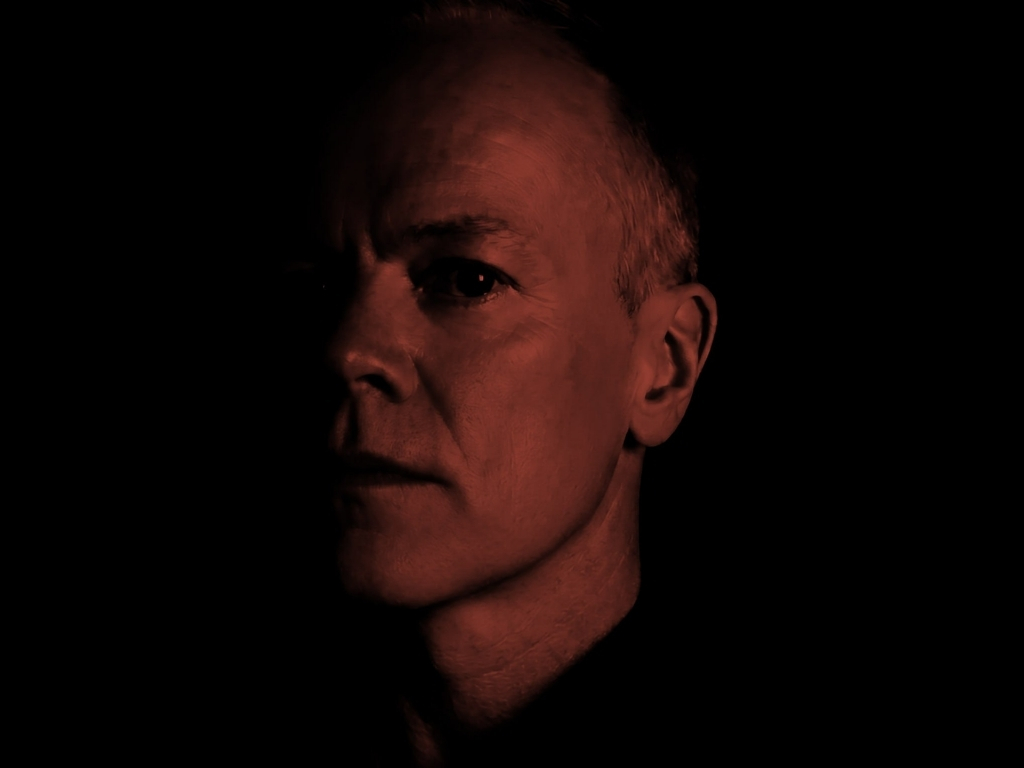
The Origin: A Farmhouse and a Feeling of Floating
I originally wrote “Free to Fly” in the summer of 1994 or 1995 — the exact year has dissolved, which tells you something about how old this song is. The inspiration came from something else entirely: a three-month summer course I took in 1993.
We stayed in a farmhouse in southern Finland and took part in a wide range of exercises under the guidance of a movement and dance therapist who was well known at the time among her peers. I later assisted her on her courses, and witnessed many times how her exercises changed people for the better — and she usually worked with people who had been unable to find help anywhere else.
That summer changed me on what she called a “cellular level.” Conventional therapy mostly means talking about your issues, and psychotherapy can take years. This was something else. This shaped my self the way nothing has ever shaped me since.
I remember one exercise in particular, demanding both physically and mentally. Afterwards, the ten or so participants described what we had experienced. When my turn came, I said I had felt as though I were floating — rising into the air beyond anyone’s grasp, especially that of my parents and relatives. It was not exactly like cutting an umbilical cord, but I felt their hold on me had finally loosened. I was free from their influence.
“Free to Fly” was born from that sense of freedom. It came together quite easily; I do not remember any particular struggles while writing it. Some songs fight you. This one just opened its wings.
Visually, I always imagined the song taking place in Renaissance Venice. When I later read Anne Rice’s novels about Armand and Marius, the setting seemed to fit perfectly — and they inspired a slightly supernatural theme that found its way into “Free to Fly.” That is something I have never mentioned anywhere except here.
The song can be interpreted in more than one way.
It might be sung by a vampire watching a new apprentice, or by a vampire remembering the boy he once was before being turned later in life. The figure could be Anne Rice’s Armand, or someone else entirely; it does not really matter. In Rice’s books, Marius is an artist with a workshop where he tutors young people in painting, sculpture, and other arts. Among the townspeople is also a lady with whom he appears to share a particularly close relationship. That atmosphere became part of the imaginative world surrounding the song.
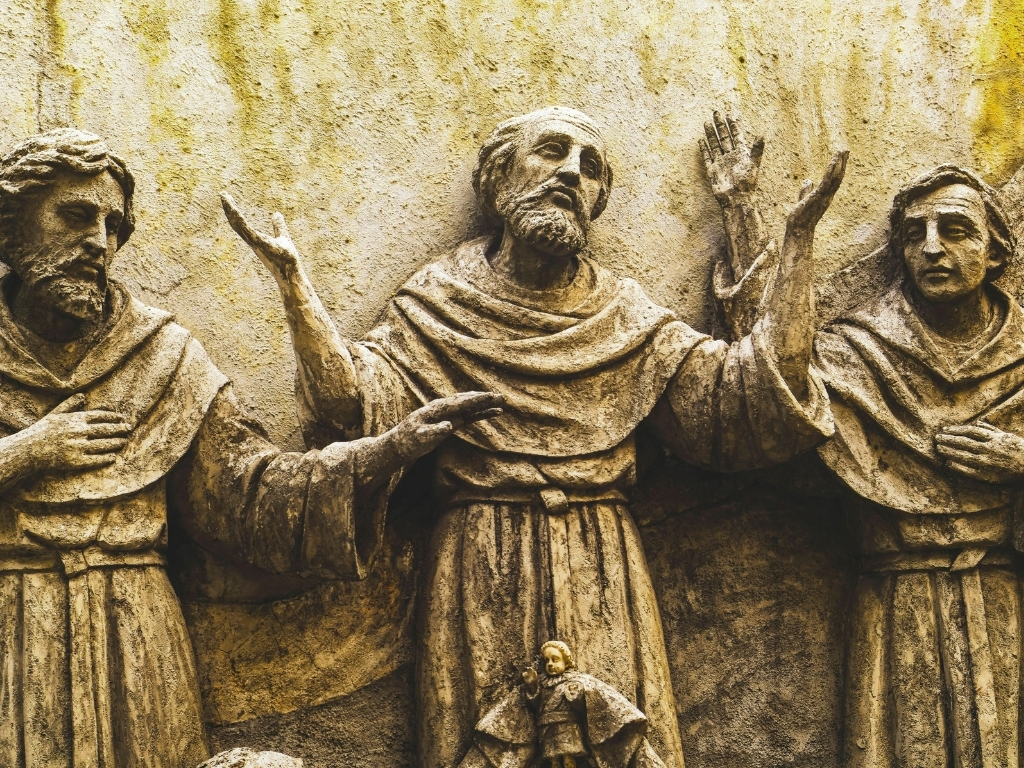
The Witch and the Swallow
Around the same time, I believe I may have met an actual witch — or at least someone who made me feel as though I had. She tried to work her way into my life in a way that felt intensely manipulative, and I somehow sensed she wanted to make me a kind of prince of her domain. Many people later said she was simply mentally ill. Who knows?
What I do know is that I was utterly captivated by her, almost under an illusion. I had never felt anything like it before, and I have not felt anything like it since. The closest word I can find is spellbound. It remains one of a handful of experiences in my life that felt supernatural, whatever its actual explanation may be.
One thing I remember her telling me was: “Harri, you need to be free. You are the swallow.” She meant the swallow as an archetype — an image that would also find its way into another “Eternal Echoes” song, “Skylark.” But this experience also had mental impact on Free To Fly.
Musically, “Free to Fly” is mellow and slightly waltz-like. When I first met my producer Juho, I already had the songs written, but I also gave him my plan for the “Eternal Echoes” album: I wanted each of its ten songs to contain some kind of ethnic element. For “Free to Fly,” he found a particularly beautiful one — the Hungarian cimbalom. There are also sounds in the background reminiscent of Balkan, or perhaps Greek, folk music, shifting the atmosphere slightly beyond Central Europe, towards the east and south.
As references, I gave my producer George Michael’s “Praying for Time” and “Father Figure,” as well as Madonna’s “Live to Tell,” to indicate the direction I wanted. Traces of all three can be heard in the song.
The main vocals are mine, as are some of the backing vocals. But for the female backing vocals, I asked my own vocal coach, Emmi, to record the parts — and she did a magnificent job. Her vocals are sensual and whispery, yet also porous, earthy and mysterious. My producer also did a fantastic job of introducing them gradually, spoonful by spoonful, until, in the final chorus, we sing together. It becomes a joining of the hero and the mentor.
An Older Sibling
What is interesting is that “Free to Fly” later inspired “European Son.” The two songs begin with the same lyric — “The summer heats the boy up” — but then move in very different musical directions. “Free to Fly” is mellow and waltzy, whereas “European Son” is much more energetic. Perhaps energetic enough to be played in a club.
Chronologically, “Free to Fly” is the fourth song on “Eternal Echoes,” and in the album’s quiet Hero’s Journey, that is exactly where it belongs. The story begins with “Underwurlde,” where a catastrophe occurs. In “Skylark,” the hero decides to leave home and embark on an adventure. He tries to find guidance in “Poliphilos’s Party,” but receives nothing. “Free to Fly” is the point at which the hero finally meets a true mentor — and the mentor happens to be a woman.
He has been forced to leave his apocalyptic home village, and there is heartbreak in that departure. Then, in Renaissance Venice, he stumbles upon his true mentor — a woman with whom he stays for perhaps a year, from one season to another. It is a happy period in his life: everything is beautiful, sacred and intimate, and he can genuinely imagine staying there. But circumstances eventually force him to move on once again.
Whether he ever meets her again remains an open question. In the final “Eternal Echoes” song, “Last Rose of Summer,” I imagine a similar figure — the person with whom the hero may finally settle down. In that sense, the circle closes: he makes peace with staying, and chooses a shared life on the Scottish Highlands.
What happened in Venice
I would love to make a music video for “Free to Fly” in Venice, where the song is thematically and geographically situated. The central story would follow a teenage boy living among the city’s rooftops by day, then descending to street level at night and entering the room of an experienced older woman who becomes his mentor. Their meetings would recur as the seasons change. An older actor could perhaps appear as the immortal — although I am not sure that character needs to be shown at all. The contrast between a striking Eastern European teenager and a seasoned woman in Renaissance dress could create a powerful visual atmosphere.
In the real world, such a production is unlikely to happen anytime soon. But the song is still out there, unknown to the hero — and to you, until you press play.
Leave a Reply