

Every Song Had to Belong
From the moment I began composing “Eternal Echoes,” I knew the album needed variety. Every song had to stand on its own — complete, distinctive, with a strong identity of its own. At the same time, they all needed to belong to the same larger picture. The songs are individual works of art, but together they form one coherent journey.
For “My Dreams of Tomorrow,” I needed a song that would mark one of the hero’s turning points: the moment he meets the monster. To make that encounter even more challenging, I imagined the monster as someone the hero once knew — an old friend.
High-Medieval Fantasy
My producer and I explored several possible musical directions. We considered turning it into heavy metal, giving it the spirit of 1980s arena rock, or even approaching it with a touch of humour through the sound of early 8-bit and 16-bit computer-game music — the kind associated with games such as Jet Set Willy and Manic Miner.
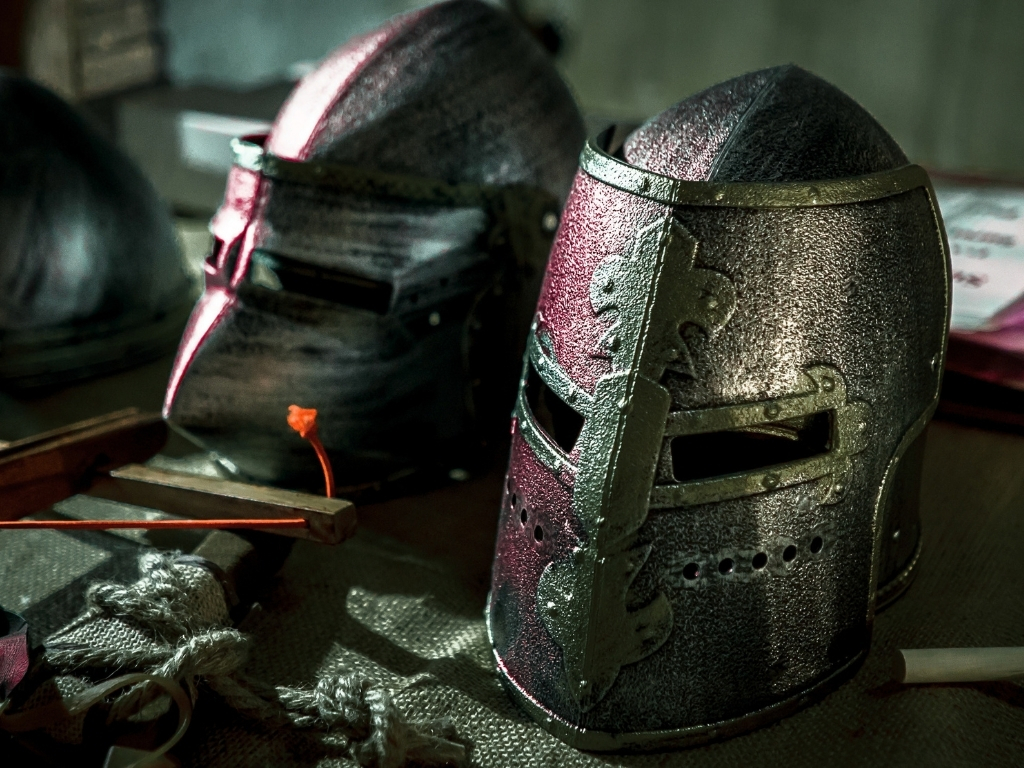
In the end, we chose a high-medieval fantasy sound. That direction carried an obvious risk: it could easily become clichéd. We wanted something evocative without becoming excessive — something dramatic, but still tasteful. Thankfully, I have an exceptionally tasteful producer, Juho Isomäki, and I love the result we achieved.
Like many of the songs on “Eternal Echoes,” this track was meant to contain an ethnic element. In this case, I think that influence comes through most clearly in the choir. It has the character of a church choir made up not of polished professionals, but of ordinary people — a communal sound that feels old, human, and rooted in tradition. Every voice is mine, layered at different pitches, so at times it sounds as though ten versions of me are singing together.
There are also church bells in the background, although they are barely audible. That subtlety is part of my producer’s genius: the bells sit right at the edge of perception, allowing them to blend naturally into the song’s structure rather than drawing attention to themselves.
The musical journey began with a very modest demo. I had experimented with sounds made by playing bottles, as well as a deep Tibetan monk-style male choir, but none of those elements really worked in the finished piece. Even so, that kind of experimentation is essential to my process. I work through free association, bringing together very different sounds and ideas to discover which combinations open an unexpected path.
One image that stayed with me was the opening of “Blade Runner (1982),” with Vangelis’s vast atmosphere punctuated by a single drum strike — almost like a doomsday clock — before the high-flying synth emerges. Into our own sound world, Juho and I introduced a Japanese koto that appears only once or twice in the background. It is another small detail, but it gives the arrangement a distinctive colour.
I am eternally grateful to my producer for making this journey with me once again. Most of the songs on “Eternal Echoes” became artistic voyages of discovery, and they demanded patience, curiosity, and stamina. I am deeply thankful that he had all three — and that he remained willing to follow each idea far enough for us to discover what the song truly wanted to become.
A Friend Turned Monster
The release of “My Dreams of Tomorrow” is accompanied by a Journey article — a piece of fiction that imagines how Poliphilos found the idea for the song. This time, the story reaches back decades, to his youth or perhaps even earlier, and to a friendship that endured through many seasons.
Then something happened to his friend. Whether through a curse, a disease, or some other force that neither of them could understand, he began to change into a monster. The Journey article mentions fjords, suggesting a world reminiscent of medieval Norway. Perhaps the transformed man had fled north and was now trying to find his way back south, towards the place where they had once lived.
Polphilos found him before he could complete that return. By then, there was no alternative left: he had to kill not merely a monster, but the friend he had once known. Perhaps they both understood that the transformation was irreversible. The tragedy lies in that shared recognition — whatever had happened could not be undone, and their long friendship could end only through an act neither of them truly wanted.

To the people who had been terrorised by the monster, Poliphilos was a hero. Yet that was a title he could scarcely accept. They saw only the creature he had defeated; he remembered the person it had been. Their deliverance was his loss, and the heroic deed they celebrated was, for him, an intimate tragedy.
Although many of the songs on “Eternal Echoes” draw on my own experiences as a twenty-something professional dancer, actor, and singer in the 1990s, “My Dreams of Tomorrow” is purely fictional. No friend of mine turned into a monster; Poliphilos’s tragedy belongs entirely to the imagined world of the song and its Journey article.
The Reluctant Hero
If there is a lesson — or a philosophy — within “My Dreams of Tomorrow,” it is that some people become heroes reluctantly. Poliphilos does what the wider community needs, but the act that saves them is also a personal tragedy. He must choose the greater good over the life of an individual who once mattered deeply to him.
That choice makes him a hero in the eyes of others, but not in his own. The community sees a monster defeated; Poliphilos sees a friend lost. His heroism lies not in glory or triumph, but in accepting responsibility for an irreversible act whose emotional cost he alone must carry.
Within the larger arc of “Eternal Echoes,” the encounter is one of the decisive milestones in the hero’s journey: the hero must meet the monster before he can truly become the hero. Until then, Poliphilos is still an apprentice — a seeker.
The order of events matters. Earlier, at Poliphilos’s Party, he encountered a mentor figure who led him nowhere. Later, in “Free to Fly,” he met his true mentor. Only after that guidance is he ready to face the monster. Without that progression, the story would not feel earned or logical.
No One’s Hero Anymore
Musically, the song inhabits a high-medieval fantasy world without imitating minstrel music or medieval chant. Its soundscape is a hybrid: a slight trace of science fiction in the Vangelis- and “Blade Runner”-inspired atmosphere, but above all the majestic cinematic strings and the church choir, built entirely from layers of my own voice.
Against that large-scale backdrop, the middle section turns inward. In an introspective monologue, Poliphilos declares that he is no one’s hero any more. Even the greatest heroes are eventually forgotten: the world keeps turning, life moves on, and public gratitude fades.
What remains is not the title of hero, but the choice he made and the burden of remembering why he had to make it.
Leave a Reply